Why companies lose top talent before they even hire it
In 2026, to attract top talent, you don’t need the highest salaries or the flashiest perks. You need to engineer environments where high‑performers actually want to stay. And here’s the part many leaders underestimate: your reputation as a workplace is shaped long before someone joins your team.
Candidates form an opinion before you ever speak to them: through your hiring process, your clarity, your communication, and your consistency. If your recruitment feels chaotic, slow, or unclear, that chaos will show up on Glassdoor. And top talent will quietly walk away.
Hiring is not a gap‑filling exercise
Most companies still treat hiring as a reaction to a problem:
“We need someone, so…Let’s fill the role.” Often, by relying heavily on AI tools.
But the companies topping Glassdoor this year think differently. They’ve realized that they’re designing culture through hiring, and that every decision shapes who stays and who leaves.
Remote candidates can now spot micromanagement, toxic productivity, and unclear expectations instantly. They’re evaluating the job and the system behind it.
If your hiring process doesn’t reflect clarity, autonomy, and alignment, high‑agency talent won’t join; and even if they do, they won’t stay long.
Hiring as culture‑design
Your hiring process is your loudest marketing tool. It tells candidates how you think and operate, how you lead and what you tolerate.
Every strategic hiring decision shapes:
- The level of autonomy inside the team
- The quality of communication
- The speed of execution
- The health of the culture
- The long‑term retention of top performers
In other words: culture is the shadow of your hiring.
Culture is to recruiting as product is to marketing.
HubSpot’s Culture code
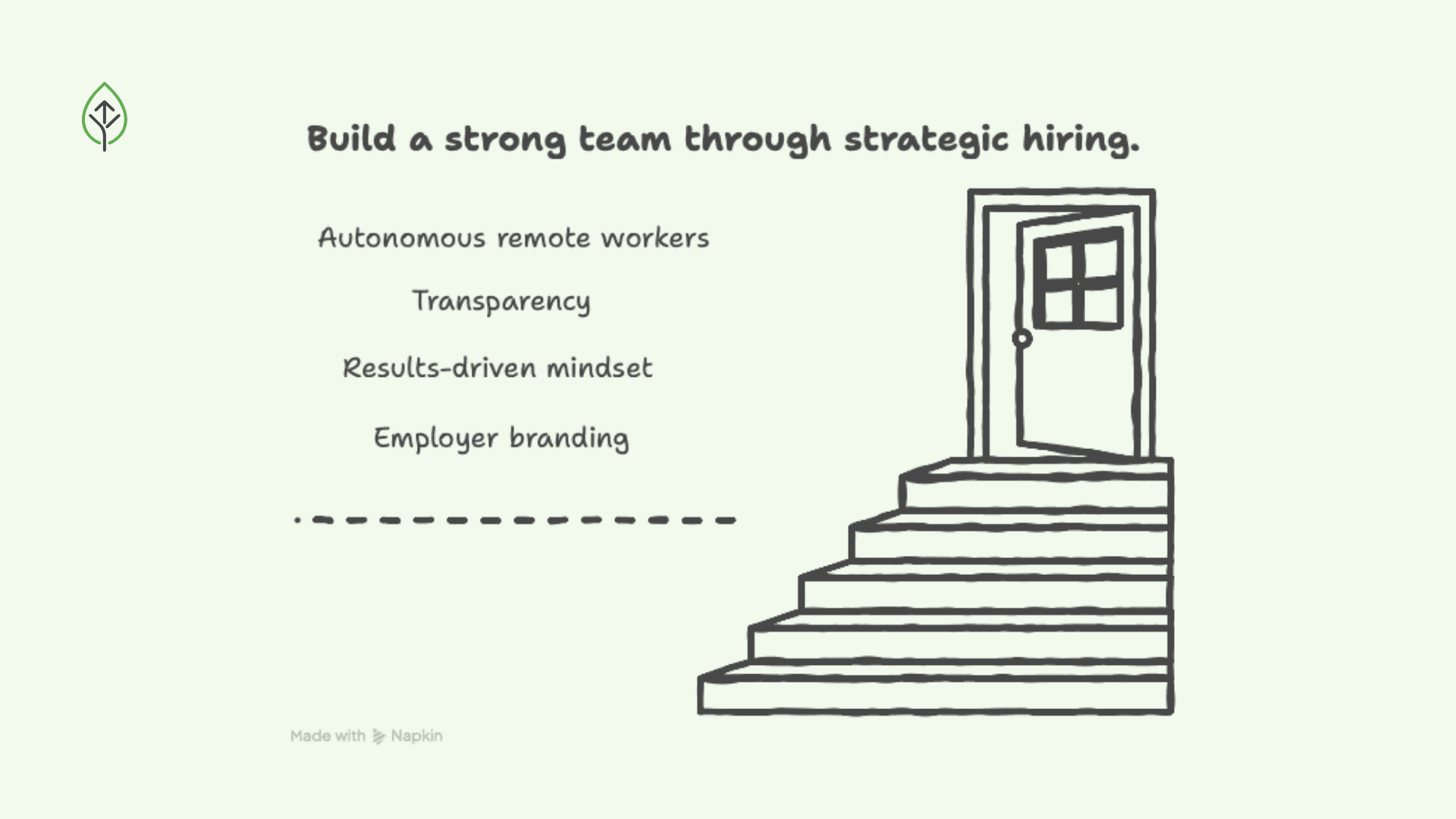
Four strategic hiring principles of “Best Places to Work”
1. Hire people who move without being pushed
In a remote environment, you cannot afford to hire people who need constant direction.
Top talent takes ownership, solves problems without waiting, communicates proactively, and moves work forward even when things get messy.
They thrive in remote‑first teams, but they’re also the first to leave when leadership is unclear.
A simple test: Ask candidates to describe a moment when they solved a problem without immediate support. Their answer will tell you everything.
2. Show candidates the reality
The best companies in 2026 are radically transparent during hiring. They tell candidates how they communicate, how decisions are made, what the challenges are, and what “good” actually looks like.
Transparency attracts the right people and filters out the wrong ones.
3. Stop tracking hours, start tracking impact
You cannot be a “Best Place to Work” if you’re still measuring presence instead of performance.
High‑performers want autonomy, trust, clarity, and the freedom to deliver results in their own way. Companies that hire for outcomes attract elite talent, while those that don’t are quietly losing their best people to remote‑first competitors.
4. Treat our hiring process as your employer brand
Every touchpoint in your hiring process communicates something:
- Slow replies signal disorganization
- Unclear expectations signal weak leadership
- Inconsistent communication signals internal chaos
- Rushed interviews signal desperation
Top candidates read these signals instantly. You don’t need a massive HR budget to fix this. You need a consistent hiring structure that builds trust.
Next steps
These four steps will turn these principles into a real competitive advantage:
1. Audit your hiring process from the candidate’s perspective
Ask yourself: “Would a high‑performer feel energized or confused by this experience?”
Fix anything that feels slow, unclear, or inconsistent.
2. Rewrite your job descriptions for clarity
When writing a job description, always remember to define:
- What success looks like
- How performance is measured
- What autonomy really means
- What challenges the candidate will face
3. Build a simple, repeatable hiring system
You need consistency and a structure for the hiring process that conveys trust:
- Screening
- Interviews
- Assessments
- Communication
- Decision‑making
4. Train your team to spot top candidates
When interviewing candidates, always look for:
- Ownership
- Initiative
- Problem‑solving
- Communication clarity
These traits predict remote success far more than experience alone.
Culture starts before day one
Being a “Best Place to Work” has nothing to do with perks or slogans. It’s about the people you hire and the systems you build around them.
Your hiring decisions are your culture. Your culture is your competitive advantage.
Remote‑first companies that understand this are attracting the A‑players: the ones who want freedom, clarity, and impact.
If you want to compete at that level, start designing your hiring process with intention.